Saturday, November 12, 2011

Xi'An, China

Written by: Dan


We took a quick weekend trip to Xi'An China. Xi'An is known locally for its mining/ energy industry, fast growth, and Universities. Globally it is known for one thing, the Terracotta Warriors.  More on the Terracotta Warriors on the following post.  That was our second day.  Day one was taking in the city.

There was quite a lot to take in during drive in.   The first thing you see when you exit the Airport is a large strip mine.  We soon figured out it was a coal mine.  We also deduced it was created to feed the huge coal power plants that accompany the drive to the city center.    During my trip I counted around 10 different, large, coal power plants.  Each with their own cooling tower.


Two, of dozens (or more), power plants off in the distance.

The second thing I noticed was the developing metropolis.  This was like nothing I have ever seen before.   Many, Many, Skyscrapers were being constructed all around.   That wasn't the strange part.  What caught my eye is the manner in which they were being constructed.  In one location they would build 10-20 IDENTICAL skyscrapers AT THE SAME TIME!  Literally hundreds of Skyscrapers popping up everywhere.   Twenty, identical, vacant, residential towers... then noting... then another dozen.. and so on, and so on. 


This is one of those Skyscraper cities being built.  Notice there are identical buildings being constructed at the same time.  This is the norm in Xi'An.


We asked Helen, our guide the next day, what this was about.  She said the government was building this housing to bring in people to work in the power plants.  I guess when a communist government puts their mind to build something, it happens.   The city doesn't seem crowded yet, but once people start moving in - look out.  Our hotel was in the city center, actually inside the city walls.  No skyscrapers, plants, or overcrowding.  Just a nice quaint downtown area enclosed by what look like the Great Wall of China.

What happens when you put coal mining, a huge power industry, tons of construction, and an enormous amount of people together?  Pollution.  The pollution in Xi'An is like noting I have ever seen.  At one point the next day Helen pointed out a Mountain 100 yards away.  You couldn't see it at all.  The entire mountain disappeared.   You could physically see the pollution everywhere.  No sky, no sunset, no "off in the distance."  And Helen told us we had great weather, a great day for sightseeing.  We could literally see the smog inside the airport.  There was a hue inside the building that couldn't be anything but smog.

I would recommend going to Xi'An, just to see the Terracotta Warriors (see my next post).  But maybe make it a day trip from Shanghai.  There doesn't seem to be much else, and it can't be good for your health.

Thursday, November 10, 2011

The Hutong

After the Wall, he a traditional lunch, followed by a tour of a pottery factory, to see how local Chinese make beautiful copper pottery by hand.  On our way to dinner we had a very unique experience.  We toured an area of Beijing called the Hutong district.  Hutong is where many live in Beijing.  It is downtown, and close to everything.  Because of the location, space is at a premium.  Most apartments do not have bathrooms, and few have running water.    The Hutong go to a community kitchen, bathroom, sink, for these needs.  As you pas buy you will see one door leading to s small court yard (maybe 10 square feet).  On each side is an apartment.  Small, one or two bedroom apartments - maybe 15 square feet.  Part of our tour included visiting a local   Hutong home.  We were greeted by a friendly, middle aged lady who served us tea and showed us her apartment.  The place had one room for herself and her husband (a bus driver).  There was a single bed in the living room for her sun.  She also had a small closet with a sink.  I was unsure if it was appropriate to take pictures, but did get a move.  Also, after becoming more comfortable Saylor did snap a few photos.  I will post when I have them.   I noticed our host was wearing jacket inside.  I realized later it is because must of China is on "Central Heat."  This is not the central heat we have back home.  In China Central Heat means the government decides when to turn on the heat for the city, and what temperature to set as well.


After visiting the Hutong homes, we had an excellent meal at a 100 year old restaurant known for their Peking Duck.   We ordered the duck, but got much more.  "Sides" so large they could be their own meal included pork, chicken, fish, noodles, and soup.  We also had a great duck-taco like course, and then a fantastic cut of duck for the main course.  During the meal (which took around 2 hours) we were entertained with a show.  the show contained opera, magic, and acrobatics.  We also asked for local wine.  Turns out "local wine" in translates to "grain alcohol" in Chinese.  Sill, we were troopers, and finished the entire bottle, to the amazement of the surrounding tables, and cooks.  We learned later event he Chinese don't like this drink - and are fully aware it tastes like wild turkey, or white lightening.  


 The restaurant.  Notice the Duck behind me.  This place was authentic.  Did even have menus.  I am guessing if we didn't have our guide (Joan), we may not have been able to get through dinner.


The Hutong restaurant/bar district where we ate.

The Great Wall of China

Written By: Dan

We decided to visit the section of the Great Wall of China in Mutianyu.  Mutianyu is about 45 minutes north of Beijing, and said to be less traveled, less tourist focused.   Still, the base of the wall contained a small market selling trinkets, magnets, "I climbed the wall" clothing, even a Chinese Hack Sac (called Tien-za).  I did some shoping.  Buy this time I have learned you can purchase items for about 25% of the asking price.  Bartering is fun.  They are not good at it.


A Chinese Hacky Sack, called Tien-za (sp?)


At Mutianyu, there are two ways to get to the Great Wall.  Climb, and take a cable car.  Neither seemed appealing to me.  However, the cable car was more of ski lift (less terrifying).  We chose that option.  It tooks about 5 minutes to climb around 550 meters.  Once on the Wall, we spent the next few hours walking from tower to tower, taking many pictures along the way.  We must have walked a few miles.  The terrain varied from flat, to steep; but overall was not as daunting as anticipated.


While the climb to the wall (up the cable car) may not have been idea - getting back was.  Mutianyu has a Toboggan run from the Wall to the base of the Mountain.  Mush like Crystal Mountain's wall at our wedding - but much longer.  Also, because of the time, the ride could go much faster.  You couldn't script a more enjoyable way to descend the mountain. 

Wednesday, November 9, 2011

Beijing, China

Written By: Dan

After Seoul, South Korea we headed to Beijing.  I have been thinking about what China would be like every day since my visa arrived.  I was not disappointed.

Our entry was much easier than I would have guessed.  Customs/Immigration officers were friendly, and quick.  There was even an electronic panel at the customs booth asking "how was my service?"

Our Hotel was located in downtown Beijing, near many of the foreign embassies.  That was a sight.  The Embassies built ornate walls surrounding the compound.  The Chinese then built barb wire fences 3 feet around those ornate walls.  Both countries put armed guards on site.  I guess the Chinese don't want people ion the Embassies either.

Our first site seeing trip was to Tiananmen Square.  The Square is know world wide for the 1989 protest.  Around China, it is knows as the world's largest square, outside of the Forbidden City.  Our guide, Joan told us most do not know of the protest since it is not in the history books, and any reference online is blocked (I tried).  Also free speech, free press, facebook, and blogging (this page included) are all blocked.  So in essence, that didn't happen to the Chinese.  A tree falls in the woods....


me at the square...


After we toured the Square we headed to the Forbidden City.  A massive city that housed the emperor, his guards, family, etc...  We toured the city for around 2 or 3 hours, and saw only a small fraction of the campus.


Entrance to the Forbidden City.  Famous Picture of Chairmen Mao.  Fun fact: the change the picture every few years and show a different picture and of Mao at a different age.  Kind of like the different Elvis stamps. 


A view of the Forbidden City.  The city is about twice as wide.  Even from the hilltop where I took this picture I couldn't capture all of it.


After the Forbidden City, our guide took us to see a Kung Fu show at the Red Theater.  The 90 minute show chronicled the life of a young monk from childhood to warrior.  Along the way performers danced, broke boards, metal poles, and other amazing feats of strength and agility.   The show was a great end to a long day.


The Red Theater


Tuesday, November 8, 2011

China

Written by: Annie

Due to Chinese censorship of Google (and free speech), Dan can't post blog updates until he is out of China. Please stayed tuned for new posts in the next day or two. Thanks!

Monday, November 7, 2011

Seoul, South Korea

Written by: Dan

We arrived to Seoul South Korea late Sunday night.  First thing I noticed upon arrival is the people in Seoul do not say you are in "South" Korea.  They just say Korea.  I need to do more research to understand the North/South status.

On our drive to the W Hotel, I was amazed by how large the city is.  Not much of a difference between Seoul and Toyko in terms of city size, complexity, cleanliness, and general "western" feel.  (Side note:  yes, I know the differences, especially in size, but it would you can not tell from a short visit).


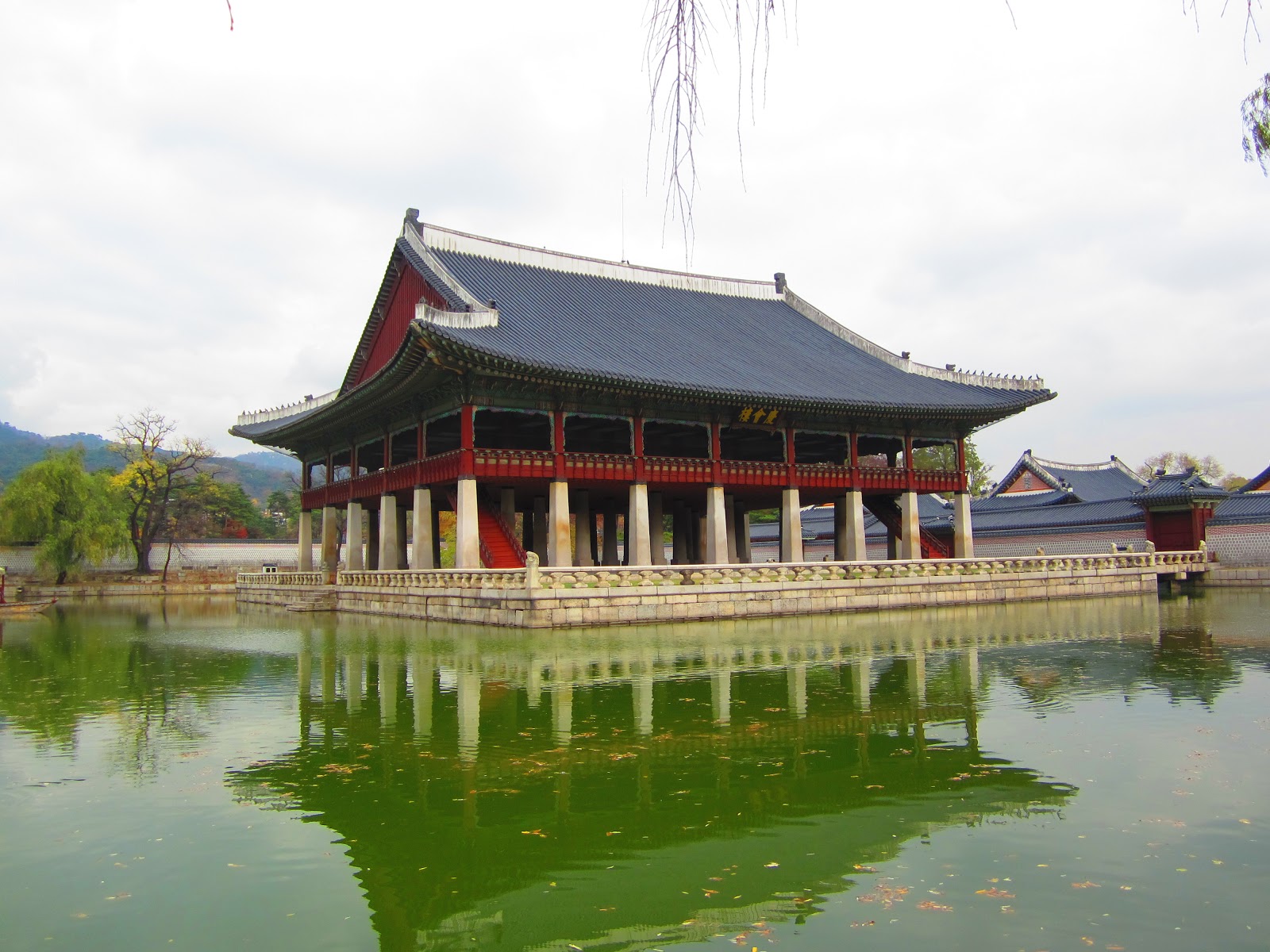
On Monday we headed to The Gyeonbok Palace, the largest of three Palaces in the city.  Gyeonbok is known for "The Ceremony of Gate Guard Change."  A long, and ornate process where very ornately dressed soldiers bang gongs, sound alarms, and play other instruments while they switch out the guards of the Palace.  If I was to invade this Palace, I would wait until the ceremony.  It would provide a good 30 minute window where they are not paying attention.  Then they start again 15 minutes later.  Entertaining, but not very intertaining.


After the cermeony we walked the rest of the Palace.  I large area, with breath taking views.


After the Palace, we had time to do a little shopping (my first of many experiences in Asian shopping), before going to a show, Nanta.  Nanta, a Koren show, is a musical/cooking/Blue Man group mixture that is quite entertaining.  They even call up audience members (this time, Saylor) to be part of the show.  I would highly recommend it, both in Seoul or when touring to the US. 

Overall, I was very impressed with South Korea.  It is much more advanced, western, and English friendly than I had expected.

Saturday, November 5, 2011

Tokyo, Japan

Written By: Dan
Pictures: Click Here

My trip to Asia stared with a long flight.  13 hours (15 after the delay).  The longest flight I have been on to date (4 hours longer than Brazil's flight).  The notable part of the flight was the actual path.  I guess I assumed we would hand a left and head over California, Hawaii, then head to Japan.  Not so.  We headed north, far north, over Russia and back down.  The views from the window were spectacular.  Ice fields for as long as the eye could see. 

We landed Tokyo at around 5pm (4am EST).  We checked into our Hotel, got some Sushi, and went to bed.  It took a while to adapt to the time difference, I was up at 3am for the next few days.  Friday consisted of business meetings, learning cultural business norms, and an excellent 9 course dinner at the 24th floor of the Tokyo Baycourt Club with our potential Japanese partners. 

Saturday started the weekend, and our time as tourists.  We spent most of the day with a Japanese guide.  Most necessary for getting around Tokyo.  She was able to help us navigate the subway, find places to eat, help shot, and general translations.


Stacy and I with our guide.

Our first stop the the fish market.  quite a site to behold (and smell).  There were thousands of people, tourists, and vendors in a small area.  They sold a variety of foods, most of which I was unfamiliar with (the signage doesn't help either).   I did purchase a kitchen knife though.


the fishmarket

On our way out of the Fish market we stopped for  lunch at a local hole in the wall.  This was not a tourist place, it sat about 6 people in a room no larger than my hotel room.   Stacy, Saylor, and I were the only white people in the restaurant, probably all day.  And the dish, Ramen noodles!  No kidding!  I must admit, this wasn't the 69 cent Ramen I lived on in college.  This dish was more of a soup, contained a whole slice of ham, and an array of vegetables.  It was one of the best meals I have ever had.   


The entrance to the restaruant.  Literally a whole in the wall at the back of a small market stand. 


A great meal

Our next stop was Asakusa, at a Buddhist and Shinto set of temples call (something) that translates to Thunder Gate.   The legend as I understand it started when fishermen found a statue in the river, then built a temple.  The statue is hidden, but the monument around it is most impressive.  In front of the Buddhist temple was a smoking shrine.  It is believed the smoke has healing powers.  We also saw a monkey show.


Healing smoke

The final stop on the tour was Magokoro, a Shinto shrine to the Emperor of the 1800's (the current Emperor's Grandfather).  A very large and impressive monument constructed in the early 1900's then again after world war II.  Before entering the temple, it was required visitors washed their hands and mouth.   Pictures in the actual temple were not allowed, but we did capture a few pics from around the area.


washing our hands and mouth before entering.

After the tour we headed back for a quick rest before dinner.  Dinner was a Japanese meal called Shaboo-Shaboo (sp?).   Shaboo-Shaboo is quite the experience.  It starts with a boiling pot of water at your table.  The waitress adds mixed vegetables, cabbage, and other (unfamiliar) elements and brings it to a boil.  Then then bring out thinly sliced meat.  You are instructed to add a piece the to pot, let it cook, then eat.  The meat is fantastic.  Unbeknownst to me, during this time the meat was also creating a broth with the cooked vegitables.  After the meat was cooked, they added noodles, and low and behold - you have an excellent stew.  This has to be one of my favorite meals of all time.  I plan on trying to recreate it when I get home.